
Reviewed by Marianne Cotugno

New and Selected Poems
by Robin Becker
ISBN: 9780826369338
Mary Burritt Christiansen Poetry Series
UNM Press (February, 2026)
162 Pages, $$$, Paper
Robin Becker’s Midsummer Count gathers new work alongside poems selected from eight full-length collections, including All-American Girl (1996), winner of the Lambda Literary Award. The dedication—“For my beloved friends— / canine and human— / dead and living”—draws attention to the collection’s concerns with companionship and mortality. Becker’s own watercolors of various bird species, reproduced in black-and-white, accompany each section, moving retrospectively from The Black Bear Inside Me (2018) to Personal Effects (1977).
The opening poem, “Eating Greenland,” dramatizes Becker’s ability to be playful and serious through a vividly rendered, surreal scene: a birthday party where costumed attendees (“a sperm whale” “a costumed glacier”) consume a cake shaped like the melting landmass. A guest (“Immortal Jellyfish”) cutting into the cake becomes an entry point into the layered histories of climate change and Cold War experimentation. The passing reference to Turritopsis dohrnii, often described as reversing its lifecycle, mirrors a volume that returns to and recontextualizes earlier work alongside new poems.
Many of the new poems take up mortality in more direct, unsparing ways. In “Harvey Is Building His Casket,” death is approached through practical detail and understated dialogue, illustrating Becker’s gift for rendering character through a few precise strokes. Harvey, a recurring figure in The Black Bear Inside Me (2018), returns, familiar as the one who “installs a stop valve” and trusts that “it’ll hold for now” (“The Fix”). His improvisations are now shaped by the inevitability of death. In the new poem, Harvey is matter-of-fact: “Biodegradable,” he says of the “untreated white pine.” The speaker, by contrast, approaches the subject obliquely, fearing that speaking of death might hasten its arrival, and ultimately “regretting the locked box / inside me and these precious, wasted minutes.”
In “The Sleeper,” “The Hardiness Zone,” and “The Walking Cure,” Becker returns to her sister’s illness and death, focusing on the speaker’s formation in relation to it. “The Sleeper” reconstructs childhood scenes shaped by medical intervention and uncertainty; the speaker’s response is both protective and helpless (“Come back. I knew not to touch you, / but in my big-sister brain I imagined / a magic carpet on which you could float / protected while I waited for you:”). In “The Hardiness Zone,” this dynamic is reframed through ecological language: the sister a “tiny seedling,” and the speaker adapts by learning to “go dormant, toughen up, become frost-hardy, fit.” “The Walking Cure,” juxtaposes metrics of distance, calories, and institutional language with childhood memories; the poem ends in self-indictment (“a disconsolate a woman with unstable knees / who abandoned her sister thirty-six years ago, / who out-walked neither the phone call nor the grief.”)
In “UPS,” Becker blends humor and self-awareness. The playful opening line (“Because it’s too late for a long marriage, / I’m considering a short one”) frames desire constrained by mortality. The imagined relationship emerges from fleeting everyday interactions structured around the limits of the UPS driver’s schedule, her constant motion, her need to “come and go.” “Thirst” begins with renunciation, only to be undone by a “tiny reproduction” of Eleanor Ray’s Snowy Owl (2020), a spare landscape in which the bird is nearly absorbed into its surroundings, its quiet presence reawakening the speaker’s “turbulence” and “appetite.” In “The Pencil Poem,” a witty catalog of writing instruments gives way to a series of imagined selves. This mode recalls earlier work, particularly “Shopping” and “The Roast Chicken,” reproduced here and originally the opening and closing poems of All-American Girl (1996). Together, they trace a trajectory from desire as projection to desire as reckoning: in “Shopping,” conditional fantasies accumulate (“If things don’t work out,” “If you leave”) while in “The Roast Chicken,” ritual repetition (“The third night I picked at the chicken / and considered how my life has been a flight”) culminates not in acquisition but in a meditation on the question of who will “remember with me.”
The final new poem, “The Unfinished Painting,” lingers on an incomplete landscape. The painter has abandoned the canvas, but in this abandonment, the speaker recognizes in its “abundant / incompleteness, a paradise / of possibility so spare I can walk / the pond’s perimeter and disappear.” The final image (“all the mineral spirits escaping”) suggests that the work is not only unfinished but less workable. As a closing gesture, it frames Becker’s collection through what cannot be resolved, even as the speaker continues to return to it.
Published in Cider Press Review, Volume 27, Issue 2.
 Marianne Cotugno is a Professor of English at Miami University, where she teaches courses in American literature and professional writing. She has published work on authors including Conrad Richter and Vladimir Nabokov, with interests in memory, archives, place, and storytelling. She is pursuing an M.A. in Biology through Project Dragonfly and is working on a book exploring intergenerational trauma, institutional child removal, and the legacy of “parentectomy” through her mother’s childhood at the National Home for Jewish Children in Denver.
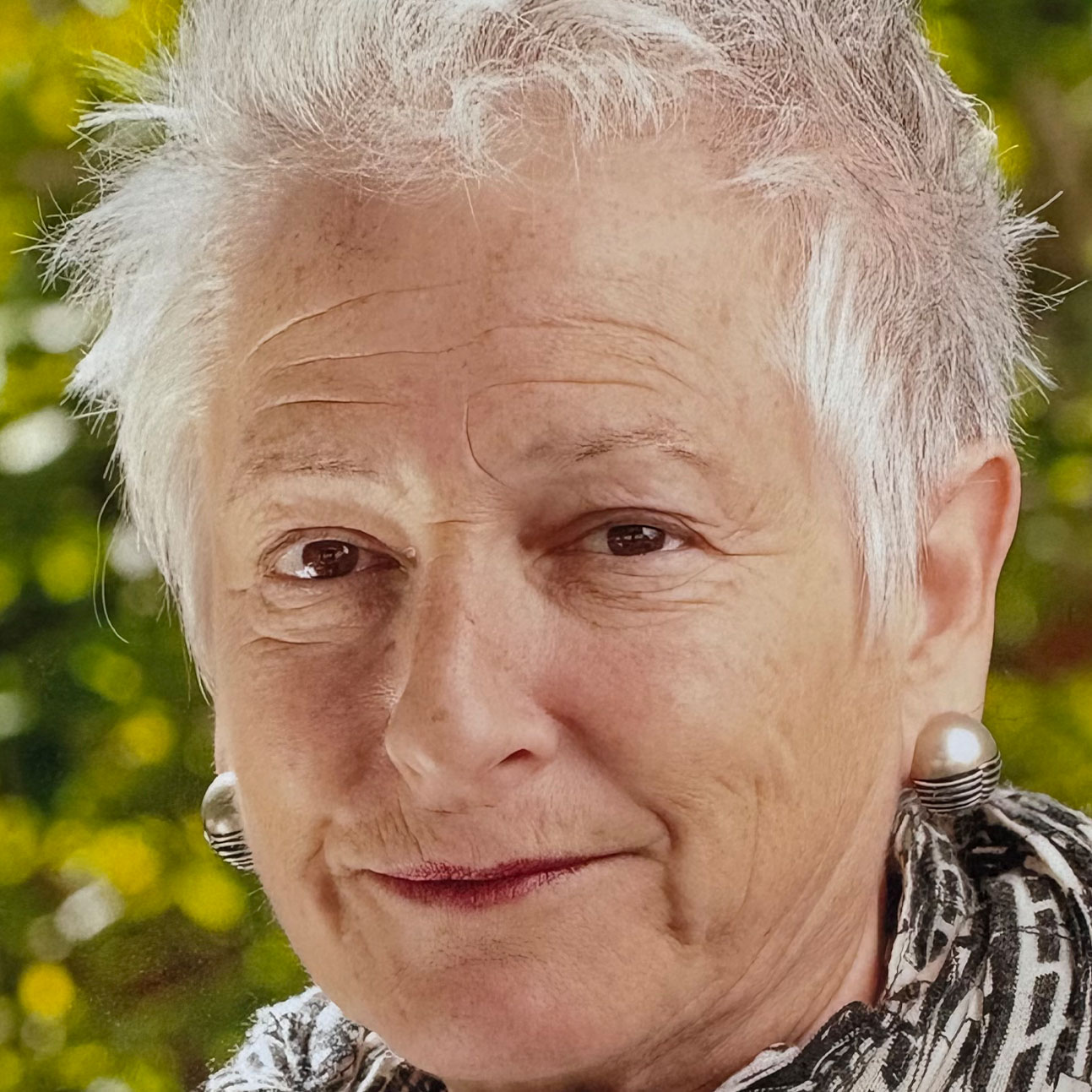
 Robin Becker was born in 1951 in Philadelphia. She earned a BA and MA from Boston University and taught for seventeen years at the Massachusetts Institute of Technology. Becker is the author of The Black Bear Inside Me (University of Pittsburgh Press, 2018); Tiger Heron (University of Pittsburgh Press, 2014); Domain of Perfect Affection (University of Pittsburgh Press, 2006); The Horse Fair (University of Pittsburgh Press, 2000); All-American Girl (University of Pittsburgh Press, 1996), which won the 1996 Lambda Literary Award in Lesbian Poetry; Giacometti’s Dog (1990); Backtalk (Alice James Books, 1982); and Personal Effects (Alice James Books, 1977). Her latest publication is Midsummer Count: New and Selected Poems (UNM Press, February, 2026).
See all items about Marianne Cotugno
Marianne Cotugno’s contributors page.
See all items about Robin Becker
Visit Robin Becker’s contributors page.